
.svg)


Blog
Welcome to the Areeb Blog where tech gets real ideas get loud and jargon takes the back seat This isn't your average blog with dry updates and corporate fluff Here we drop smart insights with personality mixing innovation with just the right amount of attitude. So grab a coffee dive in and get ready to laugh learn and maybe even question everything you thought you knew about tech This is where Areeb's brain meets its blog voice and it's got jokes.
From UIKit to SwiftUI iOS: An App Migration 30-Day Journey
Feb 15, 2026
Do you have an iOS app with a codebase that's becoming harder to maintain? Learn how we migrated a similar app from UIKit to SwiftUI!
In today's fast-paced digital landscape, delivering a seamless user experience is no longer optional, it's essential. We developed an app, which is a multi-disciplinary booking platform that consolidates all reservations into a single, intuitive interface. As the app scaled, so did the complexity behind it.
When Areeb Technology's iOS engineers first built this app, the foundation was set on UIKit, a reliable, time-tested framework. Over time, SwiftUI views were gradually embedded within UIHostingController, giving the app a hybrid architecture that, while functional, began to show its limitations.
As the codebase grew, even the simplest UI modifications became increasingly time-consuming, creating friction for both developers and end users.
The solution required a bold decision: a full migration from UIKit to SwiftUI.
It was not the easiest path, but it proved to be the most valuable investment for the project's long-term success.
In this blog, we explore how Areeb Technology navigated this migration, ensuring a seamless experience for users while building a cleaner, more maintainable foundation for future developers.
How Hard Was UIKit-to-SwiftUI iOS Migration?
To truly appreciate the complexity of the situation, consider this: every single code modification required running a simulator to verify that no visual changes had occurred to the front-end layout. This was the inevitable consequence of a hybrid architecture drawing from three major data sources:
- XIB files
- View Controllers
- SwiftUI views wrapped in UIKit
When the migration was scoped, the numbers spoke for themselves; 1,680 files stood between the current state and a clean SwiftUI foundation. These files spanned every critical layer of the application, including:
- App lifecycle (AppDelegate)
- Navigation logic
- Design system components
- Reusable views
- Feature screens
Yet the sheer volume of work was only one dimension of the challenge. On the business side, the pressure was equally demanding; the client's next sprint was already in preparation, leaving little room for disruption or delay.
At Areeb Technology, every migration we undertake is guided by three non-negotiable principles: safety, reliability, and swiftness.
This project was no exception. What made it remarkable, however, was the constraint it came with, a 30-day deadline, largely executed by a single engineer.
UIKit-to-SwiftUI Migration Journey
Like any significant engineering undertaking, this migration was not approached blindly. It was structured around key milestones that kept the team aligned and on course whenever the path forward grew uncertain.
Milestone 1: Proof of Concept POC
The first and most fundamental question before a single line of code is changed: Is this migration worth it?
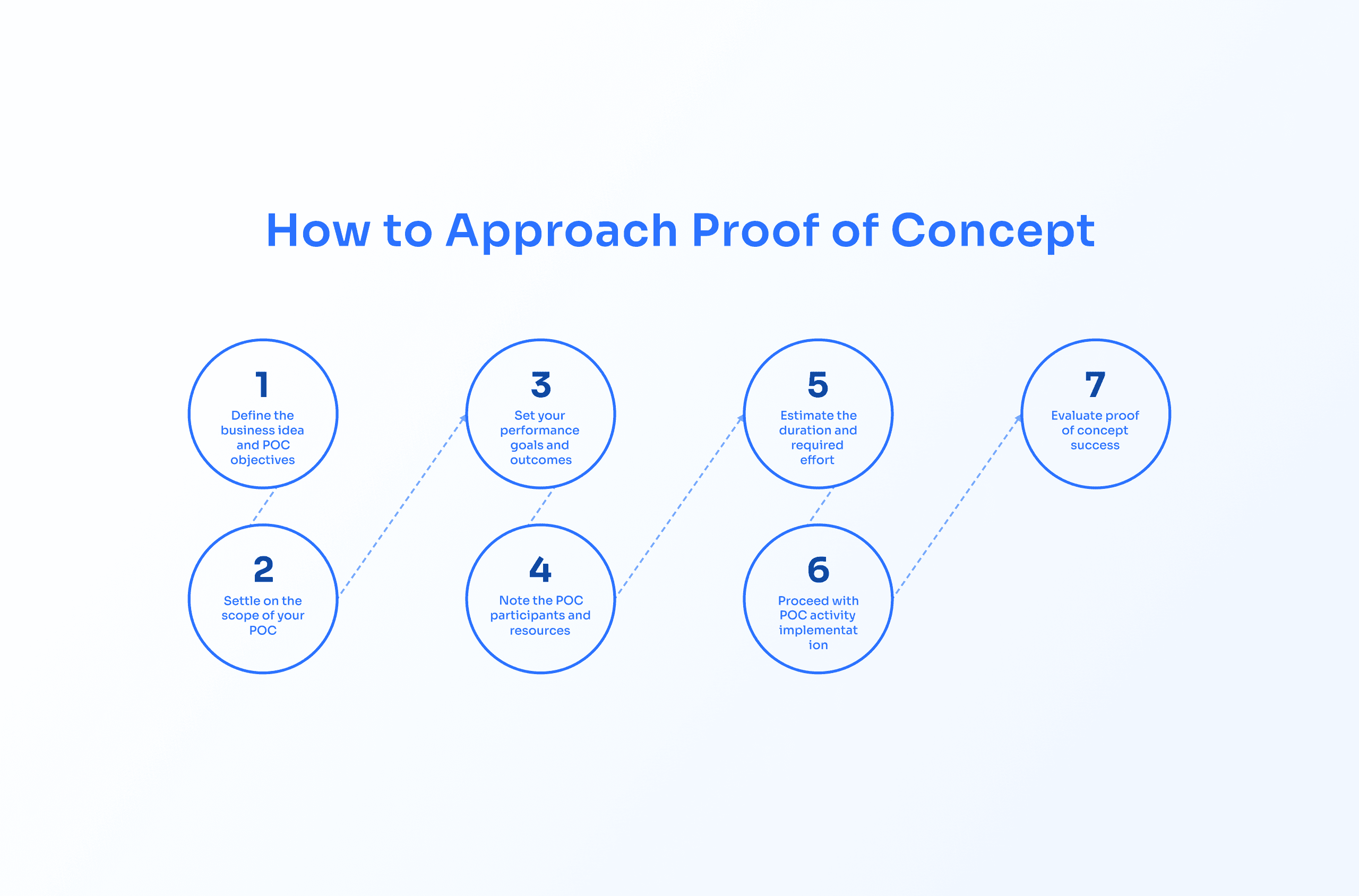
Before committing to the full scope of work, a formal Proof of Concept (POC) was essential, not only to validate the decision, but to translate it into clear, measurable, and feasible objectives. This was carried out through a series of structured round-table meetings, during which the team worked through seven critical steps:
- Defining the idea and establishing the POC's core objectives
- Aligning stakeholders and agreeing on the scope and plan
- Setting success criteria, including KPIs and measurable goals
- Identifying project participants and allocating the necessary resources
- Establishing a timeline and estimating the required effort
- Executing the POC plan, preparing it for real-world implementation
- Evaluating early results to determine whether the POC indicated a viable path forward
This process was designed to surface answers to the most pressing technical questions facing the team:
- What are the tangible benefits and limitations of SwiftUI in this context?
- What navigation challenges could arise during the transition?
- How prepared is the team to work on a scale with SwiftUI?
Leveraging the team's existing hands-on experience with UIHostingController, a clear navigation strategy was agreed upon, with known trade-offs acknowledged and accounted for from the outset.
By the close of this milestone, the team had done what every well-run project demands before execution: validated the idea, identified the expected risks, gathered cross-functional feedback, and confirmed their assumptions, all before writing a single line of migration code.
Milestone 2: Building a Smarter Migration Blueprint
Rather than relying on a generic, AI-generated plan, the team took a more deliberate approach, one that put human expertise at the center of the process. A custom blueprint was crafted by manually building a complete navigation feature first, then feeding it to the AI as a reference model. This allowed the language model to simulate the feature and generate a migration plan that was contextually informed, rather than generically produced.
The goal was clear: use a high-reasoning LLM to architect the plan, then execute it efficiently through a fast, low-reasoning model. To make this work effectively, several parameters had to be defined upfront:
1- Supported iOS Versions: To ensure that no development effort was spent on features users couldn't actually run, the team established a minimum supported iOS version, one that guaranteed full compatibility across all required components and modifiers.
2- SwiftUI Architecture Rules: A clean migration demanded a clear architectural standard, thus we set our non-negotiable guidelines:
i. Keep views small and composable
ii. Favor composition over large, deeply nested view hierarchies
iii. Extract reusable components early in the development cycle
iv. Keep business logic strictly outside of views, delegating it to ViewModels and services
v. Avoid monolithic SwiftUI views that attempt to handle multiple responsibilities at once
3- Skill-Specific AI Assistance: To raise the quality and consistency of the AI-generated migration code, the language model was trained on SwiftUI best practices. This produced a SwiftUI-specific AI skill, a targeted capability that ensured the generated output aligned with the team's architectural standards rather than defaulting to generic patterns.
Milestone 3: Error Compilation and the App Crash
With the blueprint in place, the next step was execution, and it delivered an early, important lesson.
Attempting to auto-execute the migration plan in one go proved to be a costly misstep, resulting in hundreds of compile errors across the codebase.
The approach was quickly course-corrected, rather than running the full plan at once; the team shifted to a step-by-step prompting strategy, validating a clean, zero-error build at each stage before advancing to the next.
The discipline paid off and the project was compiled successfully.
But a clean build, as it turned out, was only half a story.
The Bad News is
Despite achieving compilation success, 40% of the app has become functionally broken. Features were unresponsive, interactions were lost, and a significant portion of the user-facing experience was no longer operational.
The Good News is
Risk mitigation had been built into the plan from day one. The team had anticipated that a crash of this nature was not just possible; it was probable. And because that groundwork had been laid in advance, the situation was entirely manageable.
The LLM-assisted migration had been completed in just two days. With twenty-eight days remaining on the deadline, the team had ample runway to systematically restore the broken functionality, on their terms, without panic. The LLM-assisted migration had been completed in just two days. With twenty-eight days remaining on the deadline, the team had ample runway to systematically restore the broken functionality, on their terms, without panic.
Milestone 4: Structured Recovery Through the Action Priority Matrix
Fixing a broken app is one thing. Fixing it systematically, without losing time, momentum, or scope, is another. The team understood that an unstructured approach to resolution would be just as costly as the errors themselves.
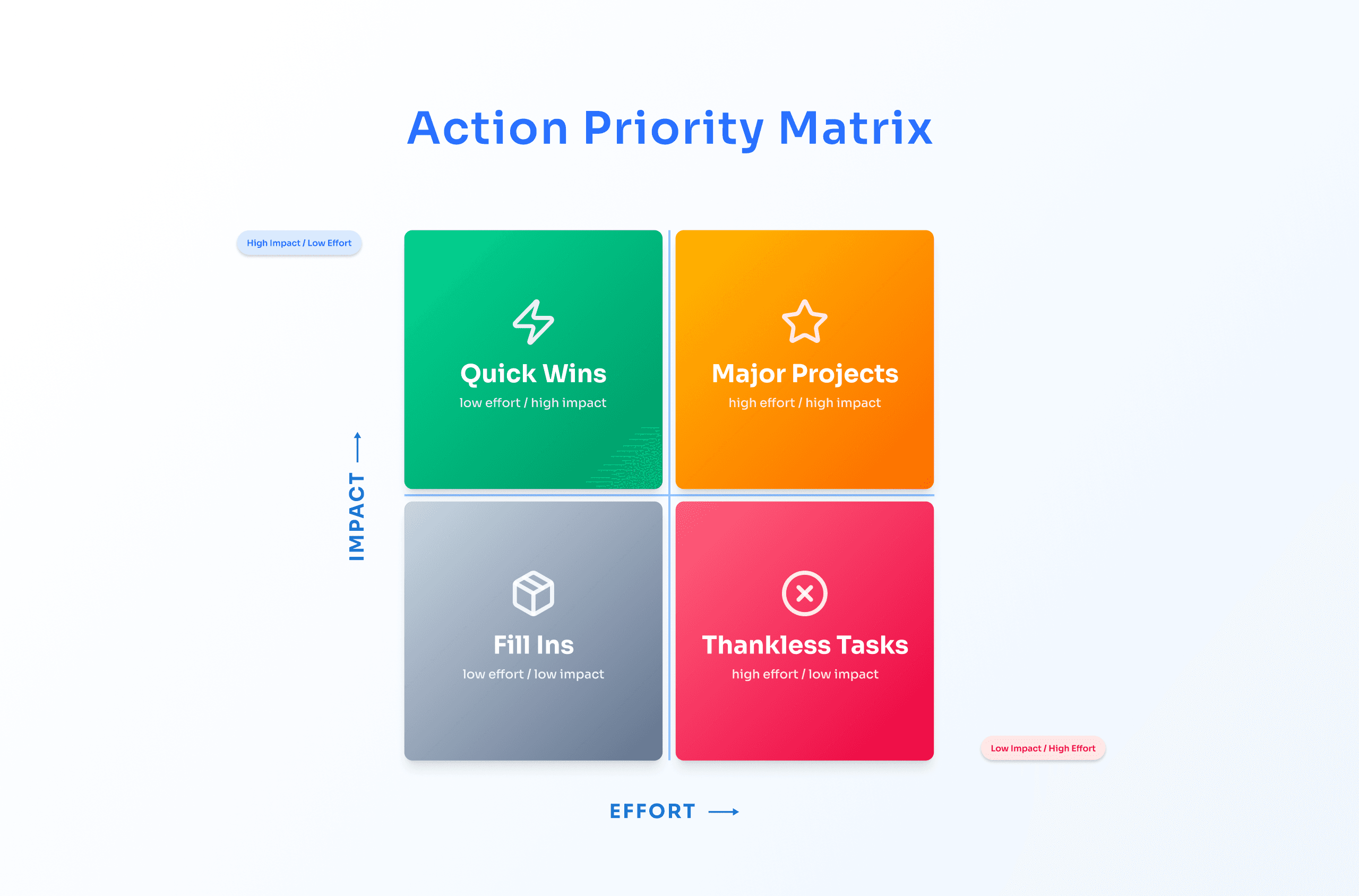
To achieve this, the Action Priority Matrix was applied as the governing framework for the recovery phase. This allowed the team to categorize every outstanding issue into one of four distinct action types, each with its own strategic weight:
- Low Effort & High Impact Actions: Quick wins that deliver immediate, meaningful results
- Low Effort & Low Impact Actions: Fill-ins that are useful but non-critical
- High Effort & High Impact Actions: Major tasks that drive core functionality
- High Effort & Low Impact Actions: Thankless tasks that consume resources without proportional return
With priorities clearly mapped, the team made a deliberate choice to lead with the low-effort tasks, both Quick Wins and Fill-Ins. This approach generated rapid, compounding progress across the codebase.
The result? By day 15, the halfway point of the 30-day deadline, the majority of broken functionality had already been resolved.
A structured recovery, executed in half the time available. The final stretch could now be dedicated to quality assurance and delivering a polished, fully functional product.
Milestone 5: Testing and Pull Request Review
With the core functionality restored, the project entered one of its most critical phases, rigorous testing and peer review. This was the stage where stability had to be proven, not assumed.
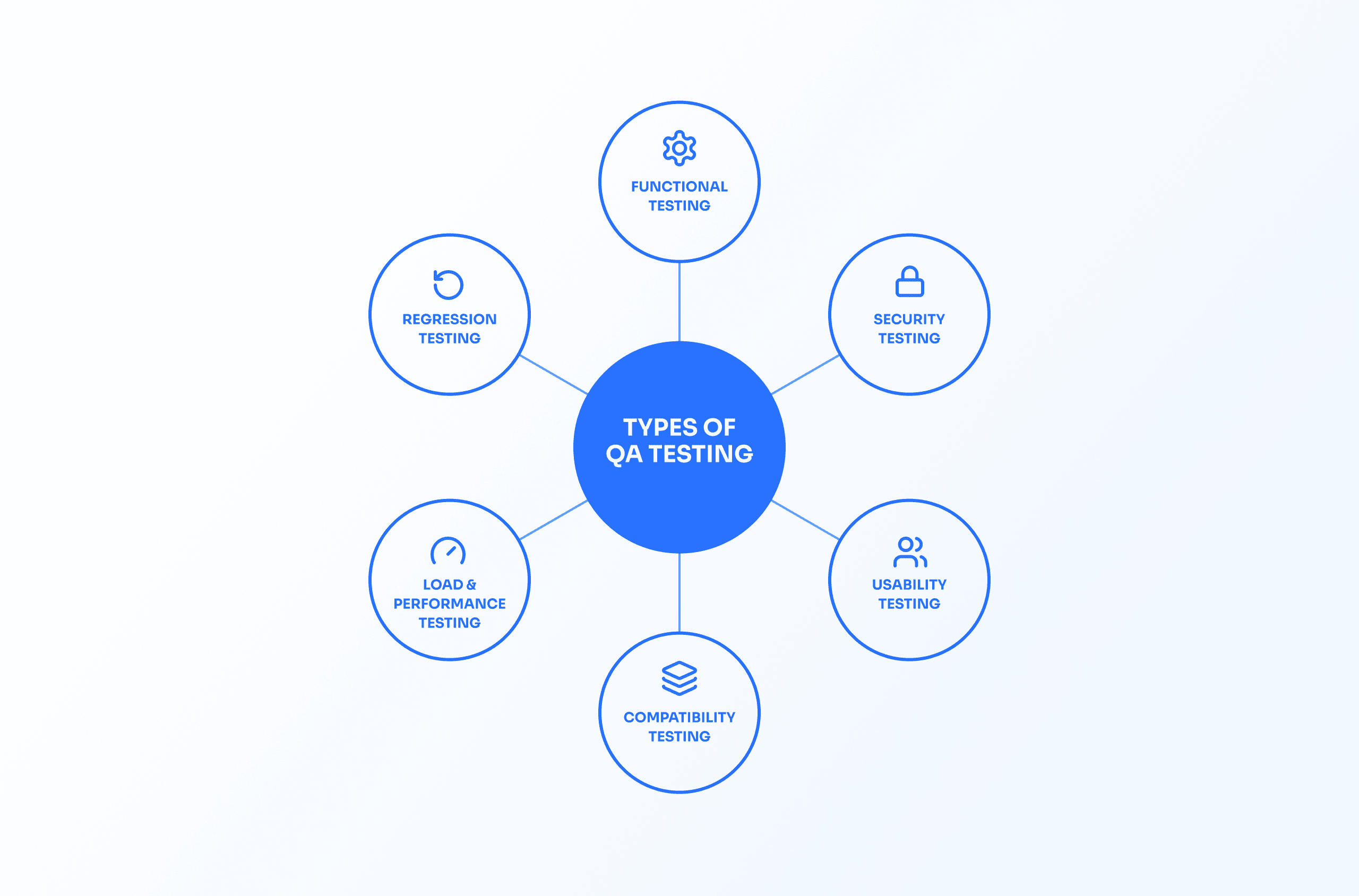
The QA team conducted a comprehensive testing cycle, covering every dimension of the application's performance and reliability:
Functional
Verifying that all features behaved as intended.
Security
Identifying and addressing potential vulnerabilities.
Usability
Ensuring the user experience remained intuitive and seamless post-migration.
Regression
Confirming that no previously working functionality had been reintroduced as broken.
Compatibility
Validating consistent performance across supported iOS versions and devices.
Load & Performance
Assessing the app's stability and responsiveness under real-world usage conditions.
The findings were actioned promptly. By incorporating the QA team's recommendations, the application reached a stable, release-ready state by day 20, ten days ahead of the final deadline.
Then, reviewing a pull request spanning 1,680 files was, by any measure, a formidable undertaking. The PR generated multiple rounds of comments from the engineering team; a testament to the thoroughness of the review process rather than the quality of the migration.
Most of the feedback was addressed and refactored directly within the review cycle. A small number of items, however, were deliberately deferred, formally documented as technical debt and added to the project roadmap for future resolution.
Conclusion: Why SwiftUI Was the Right Choice
This migration was never just a rewrite. It was a strategic architectural decision, one that aligned with Areeb Technology's long-term roadmap and commitment to building scalable, maintainable, and future-ready mobile experiences.
SwiftUI proved to be the right framework for that vision, and the reasons are both technical and practical:
-
Declarative & State-Driven: A cleaner, more predictable approach to building UI that reduces complexity at every layer
-
Composition Over Inheritance: Encourages modular, reusable component design that scales gracefully with the codebase
-
Live Previews: Accelerates the development cycle by enabling real-time visual feedback without running the simulator
-
Less Boilerplate: Leaner code means faster development, easier onboarding, and reduced surface area for bugs
-
Modern Framework Integration: Seamlessly compatible with the latest Apple technologies, keeping the app aligned with the evolving iOS ecosystem
-
Cross-Platform Capability: A single, unified codebase that extends naturally across iOS, macOS, watchOS, and beyond
SwiftUI enabled the team to move twice as fast, significantly reduce UI complexity, and deliver a codebase that is not only simpler today, but built to scale for tomorrow.
Final Thought
If your app is showing the signs that our app once did, growing complexity, mounting technical debt, and a codebase that's becoming harder to maintain, a SwiftUI migration may be the most valuable investment you can make.
Areeb Technology has navigated this journey firsthand. If you would like to learn more about our experience or explore what a migration could look like for your product, contact us. Our team is ready to help you take that next step with confidence.